On Sundays
a new essay

Poetry
Here’s Lucille Clifton’s “why some people be mad at me sometimes,” a poem I’ve always thought incredibly relevant for writers of memoir and personal essays.
Journeying
My family did not take vacations. We took Sunday drives. After church, my mom, younger sister, and I changed out of our dress shoes (no heels until you’re twelve), peeled off pantyhose or tights, removed skirts and requisite slips. Put on jeans, t-shirts, and tennies. My stepfather changed too, no more tie or blazer. Then we climbed into the “green beast,” a 1970 Ford station wagon with a dark green and wood paneled exterior that my grandfather had given my mom, and went looking for farmhouses.
After she married my stepdad, my mom sold the two bedroom Dutch colonial my grandfather had helped her purchase and moved us into my stepfather’s house. It was bigger, had three bedrooms, four if you counted the makeshift bunk room in the basement next to the giant shell of the coal burning furnace. This house also had a roof that leaked in more places than we had buckets. Its windows rattled in their frames. The upstairs toilet leaked through the floor into the dining room.
But we weren’t looking for a house with less holes. We were following my mom in her search for safety. After a childhood spent helpless in the face of my grandfather’s rage, the same man who gave her the green beast and helped her buy a house, my mother believed refuge lived in a white clad farmhouse down a dirt road. My stepfather, who grew up with the fists and belts kind of violence and had learned to fight back, didn’t need my mother’s version of protection. But my mother’s fear made her persuasive, and he had the skills, if not the funds, to make the imagined habitable.
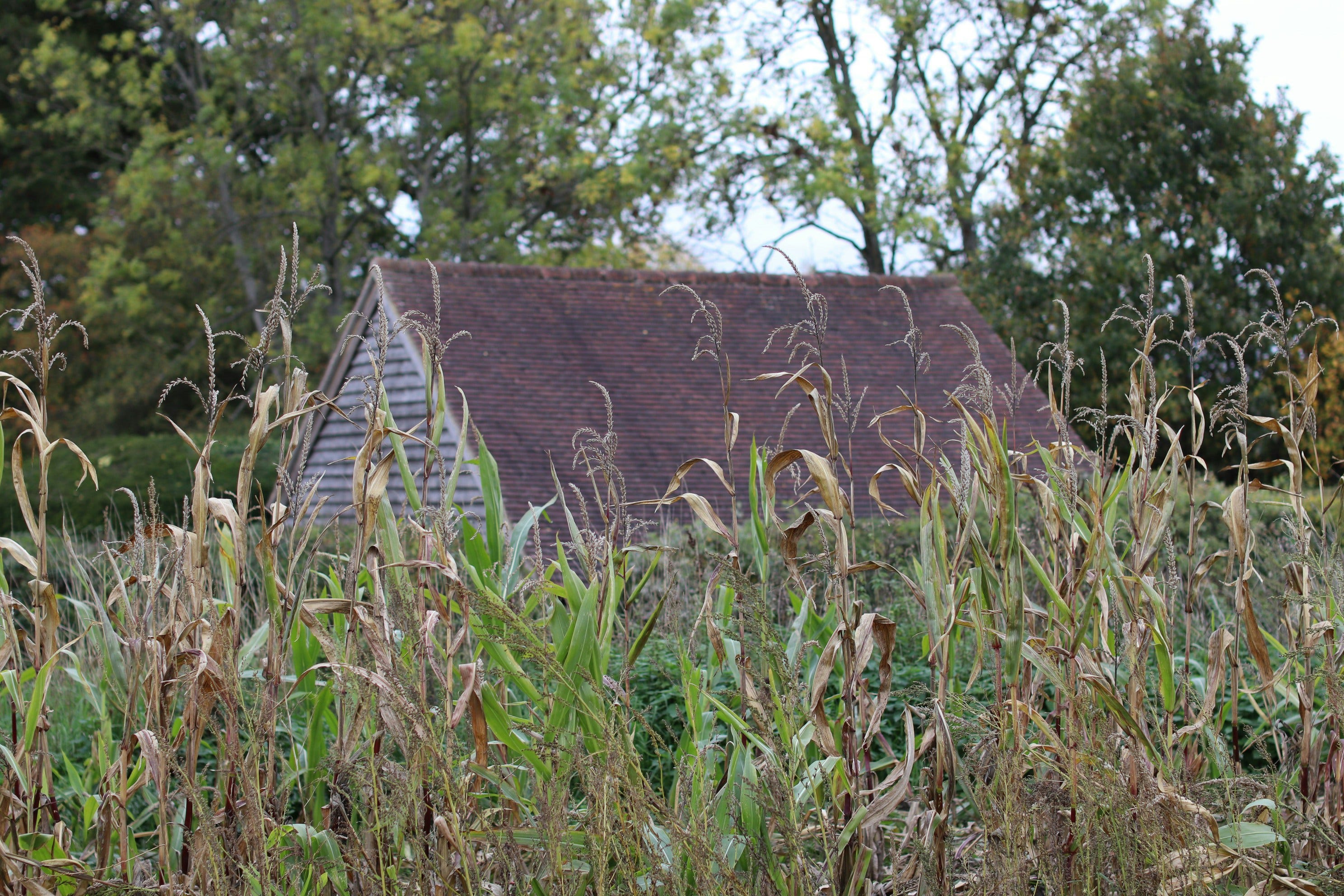
Our central Illinois college town was surrounded by corn and soybean fields. From the backseat, my sister and I searched for the white peaked roofs of houses sunk deep in corn. We kept our eyes out for abandoned ones. Houses that looked like they wouldn’t cost very much if the owner decided to sell.
We’d pull into the shadow of a driveway. Hop out, doors slamming in the quiet. The grown-ups would try to find a way inside. Often the farmhouse windows had lost their glass or a backdoor was off its hinges, requiring just a little maneuvering to dislodge. Sometimes there was no door, and we walked right in. Often, while we waited for my stepfather to climb in a window or jog a door loose, my sister and I would run into the tall grass of what used to be the yard toward the line of crops never far away. Our fear wasn’t as sharp there. The quiet cushioned us. We didn’t worry so much about someone discovering us breaking into their house, about their anger, about my stepfather getting arrested.
In one house, all the window glass had disappeared, but my stepfather said the cupboards in the kitchen were “well-built.” My mother said she loved them because they were old and had character. The four of us stared at the block of shelves and swinging doors wrenched from the wall but suspended midair thanks to a couple nails left like the last two teeth in an otherwise empty mouth. We stepped around the gaps in the floorboards, no basement in this house, just a crawlspace we could see beneath our feet. The bathroom had a clawfoot tub, and one wall covered in the brown skeleton of a vine. We looked into the toilet and found not water, but a recently dead blackbird, feet up, like someone had tried to dry flush it.
My stepfather started up the stairs.
“Chuck,” my mother’s voice had a warning in it.
“Martha?” a playful reply laced with defiance.
“I just don’t want you to fall through, honey.”
I listened to the tightness in my mother’s voice. When I looked at her, I saw what could be, a man falling through the stairs onto the hard dirt floor of the crawlspace. My stepfather exhaled, backed down the steps.
At another house, we found the same peeling siding, broken entrances and exits, rooms full of plaster and cracked boards. This house had an outside basement entrance covered with warped white doors. My mom said, “This could be a root cellar!” as my stepfather hauled open a door. The cellar was full to the second step down with black water.
My mom, sister, and I toured these homes and planned. We’d plant the garden where there was the most sunlight, between the house and the barn with the collapsing roof. We’d plant enough tomatoes to can sauce, cucumbers for pickles. We would save carrots in buckets of sand and potatoes in crates on the dry root cellar floor. We would sew calico cafe curtains for the kitchen windows. Maybe we would even have a wood cook stove that would funnel heat to the bedrooms above, where we would sleep under down comforters on bitter nights. My stepfather had different plans, his included lists of building materials and where to get them for free.
I don’t think they ever contacted a realtor or went for a drive with someone who had legal access to these properties. My stepfather had filed for bankruptcy the year before he met my mom. No one would have given them a loan. Still, did they believe they could make a life out of missing floorboards and shattered glass? Each Sunday, standing inside another broken doorway, waiting for the dust to settle, we did. On Sundays, we believed it.
Gardening and Making/Mending will be back in the next newsletter. Here’s a peek at what’s been happening:


Upcoming on Threshold: A Mystery Topic
Yes, you read that right. The next topic is a surprise. Not to worry, I can assure that it is in keeping with our theme of how to live in life’s grey areas. Join Julia Rymut and me Monday, June 15 at 11:00am CT.
All recordings are available here.
Emily, This essay took my breath away. It is heart-rending and beautiful, and full of such hope and vulnerability. I am grateful for who you have grown yourself into, and for your words and heart and life. Hugs from me.
I love this so much, Emily! Your writing is sparse and beautiful. The imagery is unforgettable. 🙏